

“So we can confidently say, ‘The Lord is my helper; I will not fear; what can man do to me?’” —Hebrews 13:6
John Finn and the Attack on Pearl Harbor, December 7, 1941
 n commendation for their actions during the infamous Japanese attack on American bases at Pearl Harbor, fifteen U.S. servicemen were awarded our nation’s highest military award: the Medal of Honor. For fourteen of them, the honor was given posthumously, their valor having cost them their lives. The fifteenth recipient, aviation ordinance chief of the U.S Navy, John Finn, survived that dark day against all odds because, in his own words, “the Lord wasn’t ready for me yet.”
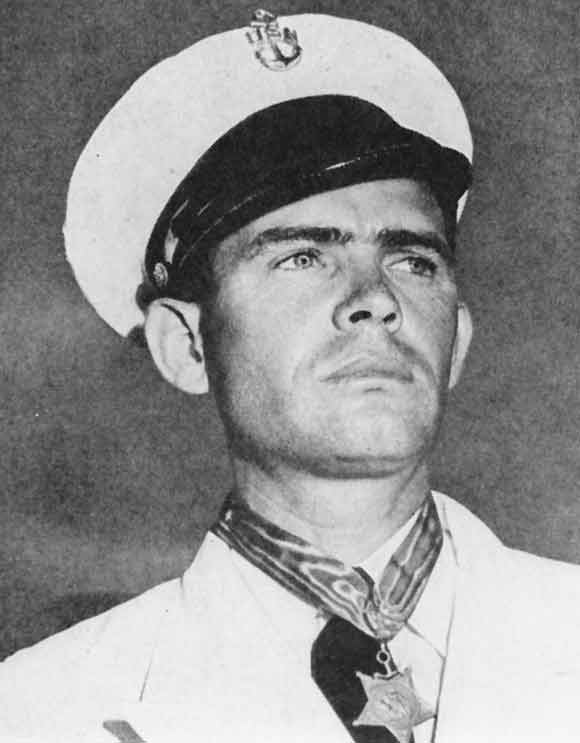
John William Finn (1909-2010) wearing his Medal of Honor
John Finn joined the Navy back in 1926, just days shy of his sixteenth birthday, when the world seemed permanently at peace and joining up presented a wonderful way for a curious young man to travel the globe. Travel he did, serving on a variety of ships that took him through the Panama Canal and six hundred miles up the Yangtze River. He not only traveled during this time but he also married a lovely lady named Alice. He earned one promotion after another for his diligent attitude, rising through the ranks to become chief petty officer in charge of a twenty-man ordnance crew whose primary duty was maintaining the weapons of a squadron of naval patrol planes.
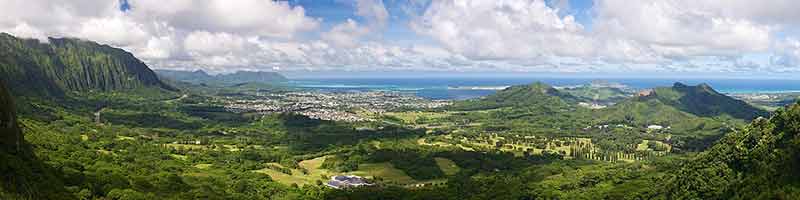
Kanoehe Bay, Hawaii
December, 1941 found him stationed at the Naval Air Station in idyllic Kanoehe Bay, Hawaii. It was a perfect, serene and respectable place to have one’s family on base, and John Finn, sleeping in with his wife on a Sunday morning, was awoken by a popping noise. His initial reaction was aggravation, assuming some young buck had decided to start gunnery practice early.
Then he heard the sound of planes passing overhead and shouting in the street, followed by a loud knock on his door. It was the wife of one of his men. When he asked her what was wrong, she just pointed up in the air and told him he was wanted at the squadron right away.
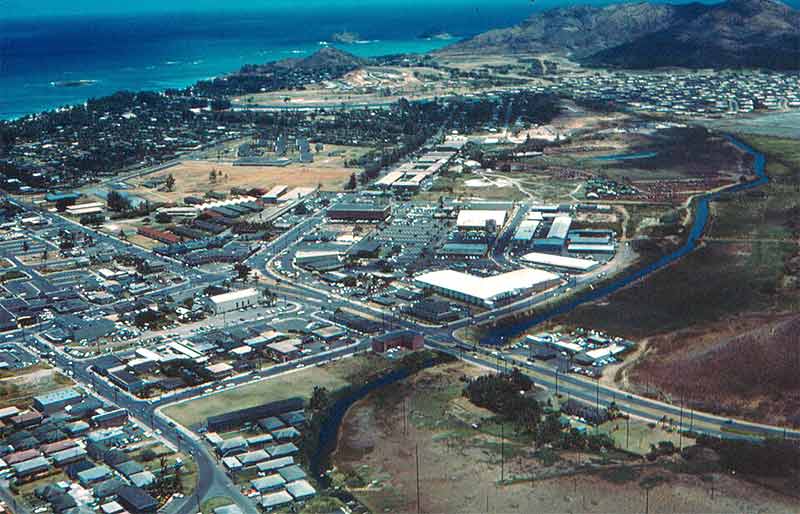
Kaneohe Bay Marine Air Station in 1962
Still not aware of what was causing all the confusion, Finn then jumped in his car, clad only in his pajamas, and headed for the hangars where they kept the planes. His wife, Alice Kitt, sensing a more dire situation than he, yelled after him to come back alive.
He was still observing the base’s strictly-enforced speed limit of twenty miles an hour when a fighter plane came roaring down out of the sky above him. He watched it with curiosity for a moment until he saw the “red meatball” of the Japanese insignia, then rammed the car into second gear and stomped on the accelerator.
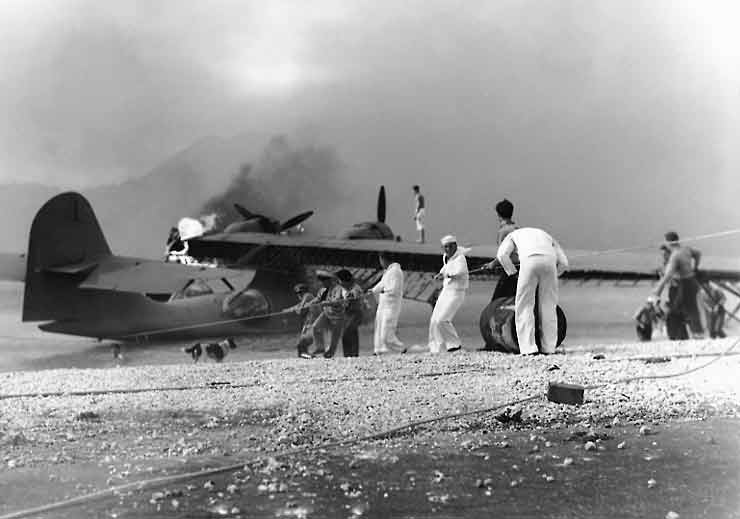
Sailors trying to save flying boat at Kaneohe Bay, December 7, 1941
He got to his squadron base where the amphibious patrol planes were towed back and forth between the water and their hangars, and found total chaos. All but three of the thirty-nine planes under his charge were already on fire. Some of his men were inside those burning planes, tenaciously trying to utilize their still-functioning machine guns to fire back at the enemy. Others had the bright idea of removing the guns out of the damaged planes, but there were no stationary gun mounts on the ramp to hold them. The sailors then took to improvising, using pipe from the machine shop and other materials. Finn found the squadron’s painter valiantly trying to figure out how to work a .50-caliber machine gun; Finn suggested he take it instead.
Finn found a mobile tripod on which guns were sometimes mounted to teach gunnery. He moved the stand into the nearby parking area where he would have clear visibility and mounted the .50-cal machine gun on it. Clear visibility goes both ways, and this entire time Finn and his men were being relentlessly strafed by the Japanese. Now Finn began to shoot back.
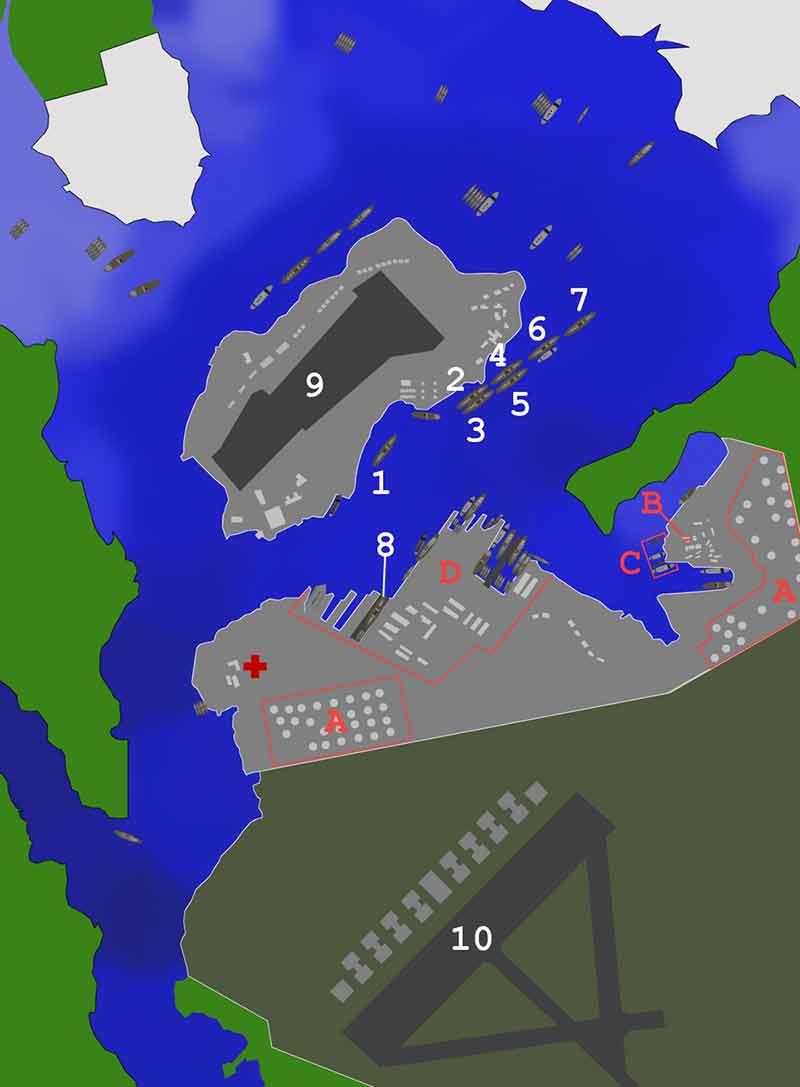
A map of the area on December 7, 1941, demonstrating what was hit and what was spared: Attacked targets: 1: USS California. 2: USS Maryland. 3: USS Oklahoma. 4: USS Tennessee. 5: USS West Virginia. 6: USS Arizona. 7: USS Nevada. 8: USS Pennsylvania. 9: Ford Island NAS. 10: Hickam field. | Ignored infrastructure targets: A: Oil storage tanks. B: CINCPAC headquarters building. C: Submarine base. D: Navy Yard.
John Finn would hold his position at the .50-cal in the middle of the parking lot for the next two hours. The Japanese fighters went by too quickly to track with the gun but he did hit some of the slower-moving bombers, although they quickly disappeared over the tree line so he never knew if any eventually crashed. He kept it up and didn’t stop firing until all the enemy planes had gone and it was quiet again.
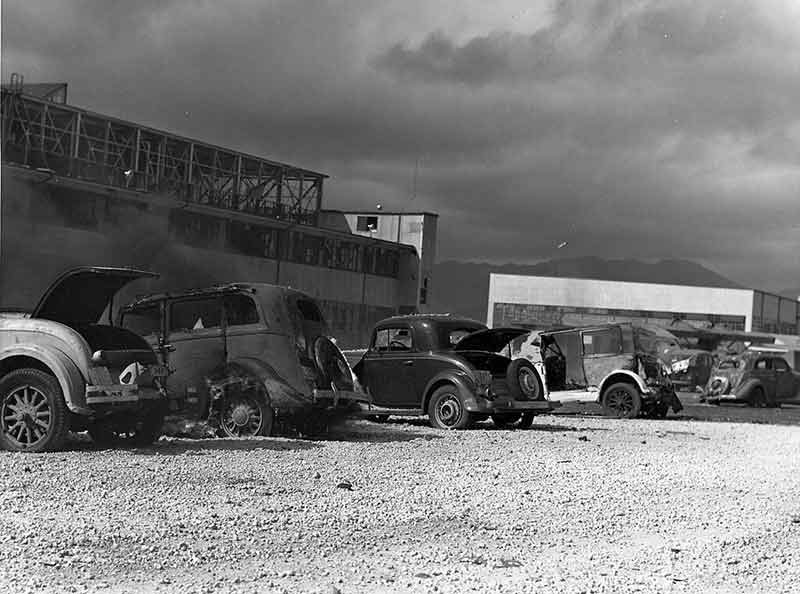
Burned out cars at Kaneohe Bay, December 7, 1941
Extraordinarily gutsy and resourceful as this action was, due to the completely unprepared status of the men on the ground during the attack, it was commonplace amongst our servicemen that day. Battlefield heroics showcase a particularly carnal and immediate kind of courage, where impossible tasks are undertaken in murderous conditions due to split second instincts.
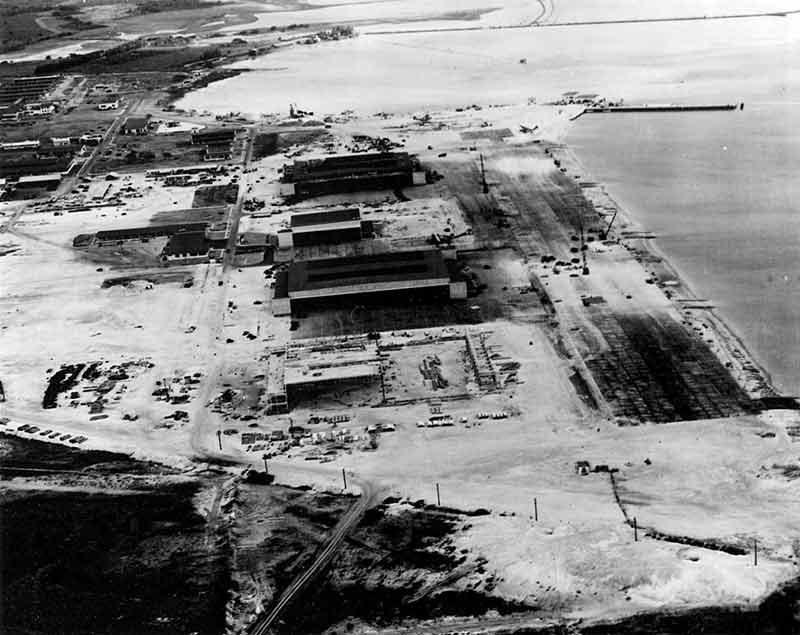
Kaneohe Bay in ashes after the attack, December 7, 1941
Lt. John Finn displayed all these things, but what set him apart was that he stuck to his post for two hours despite having been struck by shrapnel a total of twenty-one times. Several of these wounds proved to be severe. When silence descended in the aftermath of the attack, when no buzz of an approaching enemy plane threatened, Finn took stock. His appraisal noted that his left arm was numb and a bullet had passed through one foot.
Only when ordered to leave the gun and seek medical attention did he get some gauze slapped on these obvious abnormalities, but then returned despite his physical pain and set about supervising the rearming of the remaining planes.
For these actions he was awarded the first Medal of Honor of the Second World War. He was formally presented with the decoration on September 14, 1942, by Admiral Chester Nimitz, for courage and valor beyond the call of duty. The ceremony took place in Pearl Harbor on board the USS Enterprise and Finn would later cheekily remark he was relieved not to have received it from FDR as he “wasn’t a fan” of his. He also gave his wife and dedicated nurse, Alice, full credit for nursing him to health and ensuring he lived long enough to wear it. When asked by children how he won the medal, he was fond of telling them he didn’t win it, he just did his job.
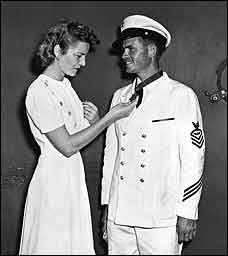
Alice Finn admires her husband John’s Medal of Honor
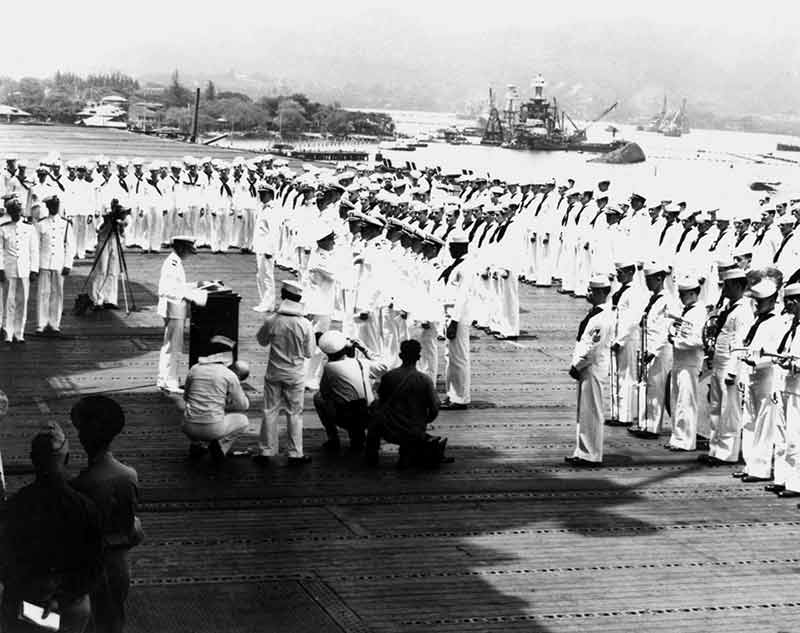
U.S. Navy Admiral Chester W. Nimitz presents awards on the flight deck of the aircraft carrier USS Enterprise at Pearl Harbor. The USS West Virginia is visible in the background with salvage work going on. The bottom of USS Oklahoma is visible in front of West Virginia, the main mast of USS Arizona is beyond her.
After the war Finn resided on a 90-acre ranch in California, where he and Alice became foster parents to five Native American children belonging to a nearby tribe. In his retirement he made multiple appearances at various events honoring veterans, and was dogmatic about remembering the other fourteen Medal of Honor winners from that day who perished.
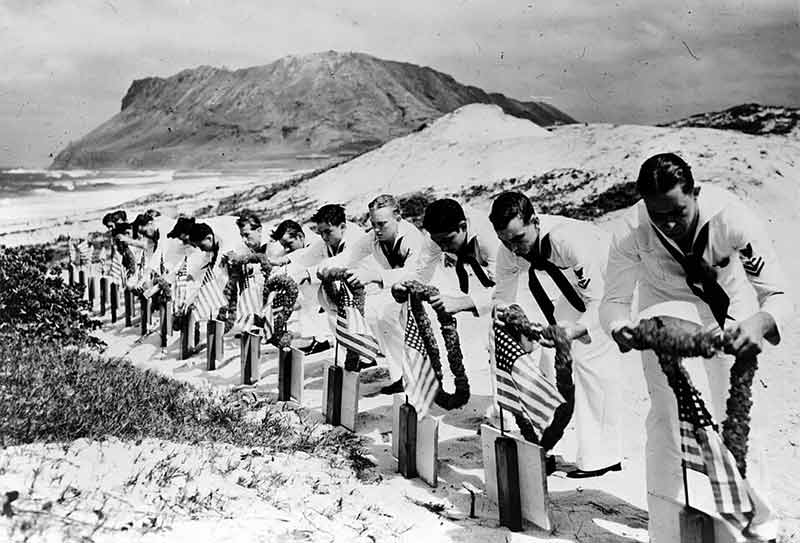
Seamen at Kaneohe Naval Air Station decorate the graves of their fellow sailors killed at Pearl Harbor, 1941
He lived to be 100 years old and gave credit to his Maker for each:
“Twenty-one wounds and not one of them fatal. The doctors told me later a couple of those bullets missed my heart by inches. I told ’em, ‘Boys, it wasn’t inches—it was the hand of God.’ He had His hand on me that day, no question.”
Whatever the politics of the moment, the withheld warnings or the responsibilities of those in high command, a total of 2,403 common servicemen died from a Japanese preemptive attack on December 7, 1941. Some died aboard their ships, some in their barracks, some in the strafed hospitals, others while defending their bases and airfields. Let us never forget.
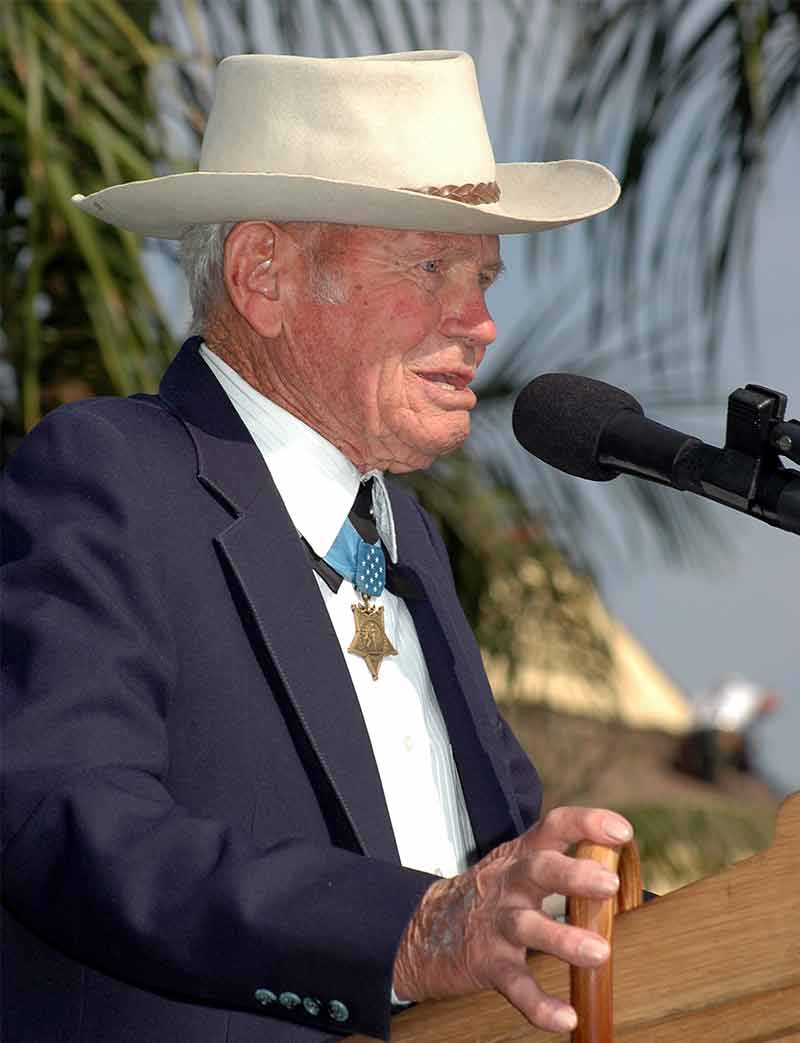
John Finn—in 2005 at the age of 96—speaking at a dedication ceremony
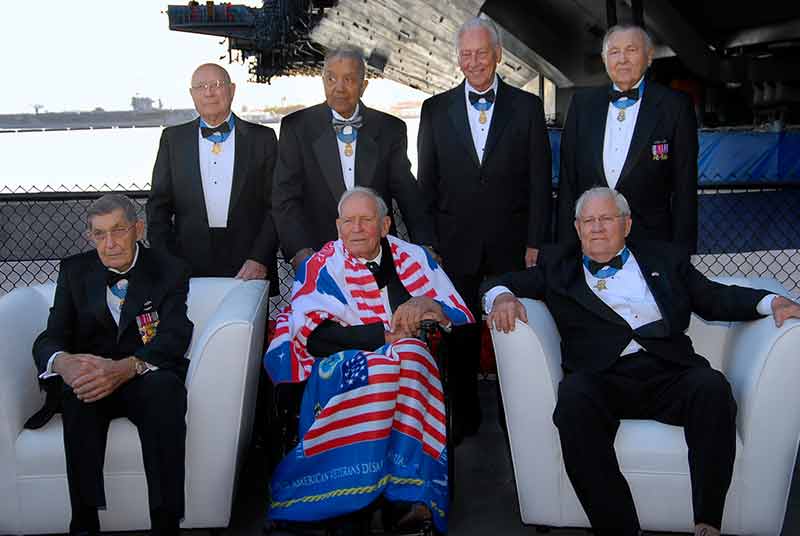
John Finn in 2008 (seated, center) with six other Medal of Honor recipients of WWII
Image Credits: 1 Hudson Taylor in 1893 (wikipedia.org) 2 Barnsley, Yorkshire, England (wikipedia.org) 3 Taylor age 21 (wikipedia.org) 4 Hudson and his wife Maria (wikipedia.org) 5 The Lammermuir Party (wikipedia.org) 6 Maria Dyer Taylor (wikipedia.org) 7 Jennie Faulding Taylor (wikipedia.org) 8 China Inland Mission Headquarters (wikipedia.org)