

John Dunlap | Profiles of 1776
 he distribution of truth has been labeled a treasonous act many times throughout the ages. Publishers have often been persecuted—whether for printing Bibles, tracts, or treatises—and have been executed, exiled, or otherwise had their livelihoods destroyed, not for material they themselves crafted, but for daring to propagate another’s words in the common tongue.
In her colonial days, America had already faced the issue of certain banned works, with treatises like Thomas Morton’s New English Canaan (1637) being forcibly suppressed by the colony of Massachusetts. Likewise, one of our most prestigious Founding Fathers, Benjamin Franklin, was himself a newspaper printer, and his brother James, under whom he apprenticed, was arrested for seditious libel in the 1720s.
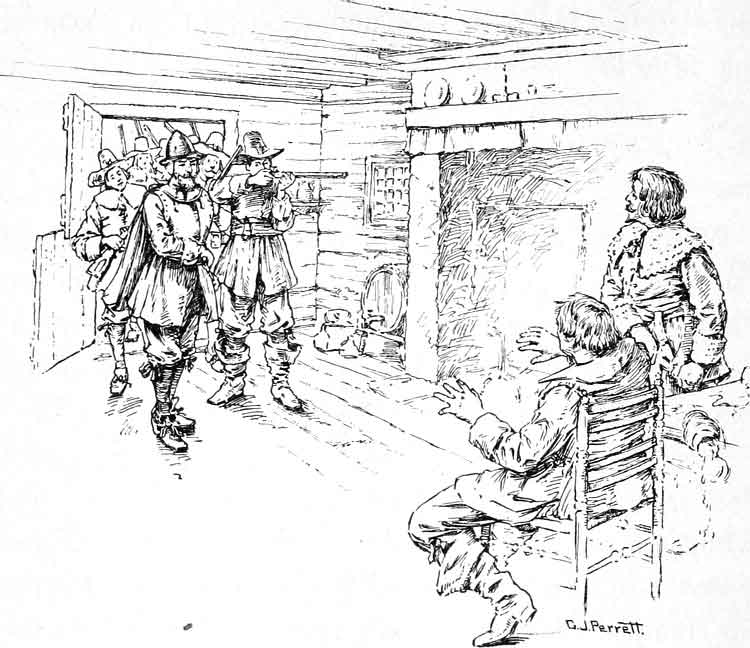
Arrest of Thomas Morton, author of the first banned book in our nation’s history, New English Canaan
Such measures against the free press were not particularly common, nor were their sentences as severe as in England, but the cost had been proven to the colonists long before the need arose for someone to print the most seditious article ever seen in North America—the Declaration of Independence.
The final unanimous vote for secession from England was held by Congress on July 2. On July 3, John Adams predicted in a letter home that this day would enjoy all the fanfare of future celebrations, which July 4 now holds. On July 4 itself, Congress made small alterations to the text of the document, and once approved later that day, representatives began to affix their names.
By the evening of the 4th, the handwritten final draft was taken four blocks down the road to the print shop to be set for dispersal.
Earlier in the year, Irish-born printer John Dunlap had secured a lucrative—if somewhat risky—contract with the outlawed Continental Congress.
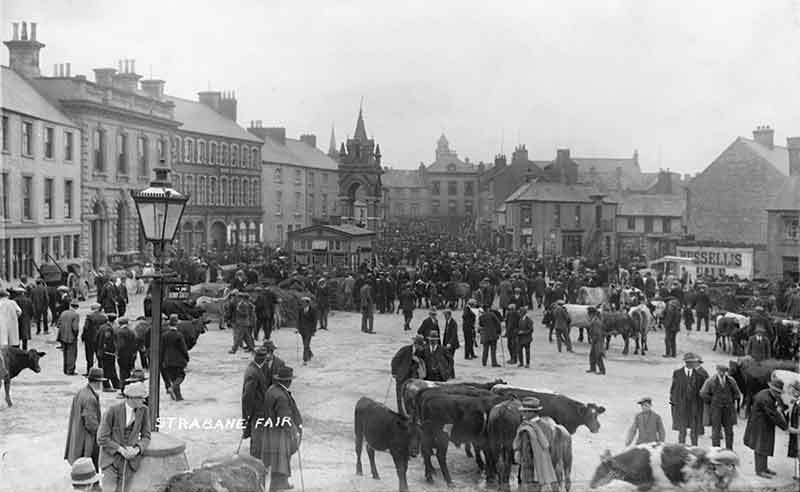
Strabane Fair (center square), Strabane, County Tyrone, Ireland, hometown of John Dunlap
At age twenty-nine, Dunlap owned his own press and had made himself successful by printing sermons. Now he printed the Congress’ various entreaties and proclamations that preceded the drastic breaking with the mother country. And then, on the 4th, there came into his hands the most significant article of writing in our nation’s history—the publishing of which could bring down upon him an easy death sentence for crime of treason in the Americas.
Dunlap and his crew worked tirelessly throughout the night of the 4th. It is assumed that one or more members of the Committee of Five charged with drafting the document—these being Adams, Jefferson, Franklin, Sherman, and Livingston—superintended the work in some capacity.
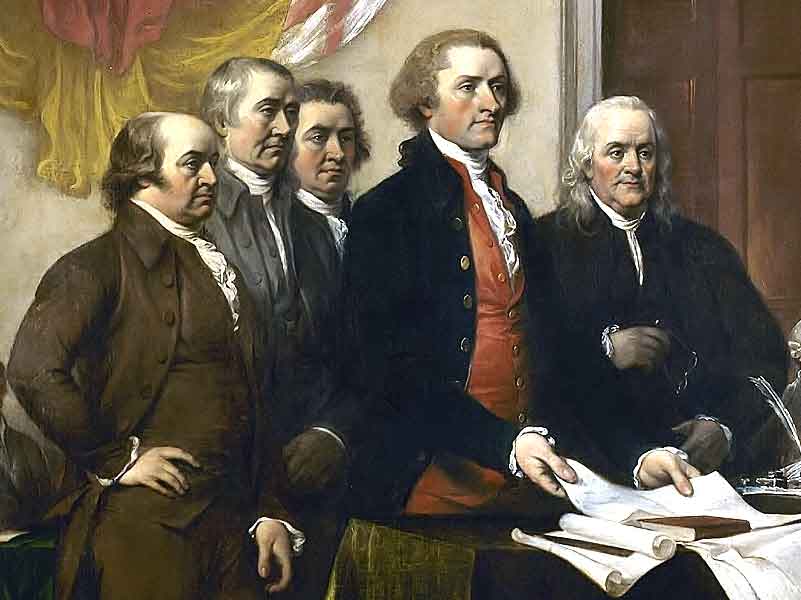
The Committee of Five—Adams, Sherman, Livingston, Jefferson and Franklin
There is no official record of just how many broadsides Dunlap produced in this first prestigious effort, but the general consensus is around 150 to 200 copies. The ink smudges and off-kilter settings of some of them remain as indelible proof of the haste with which they were dried and then bundled for couriers to take to each corner of the thirteen newly free and independent states.
By the morning of July 5th, President Hancock was industriously sending out what became known as the Dunlap Broadsides with his own personal notes. To General Washington at New York he enclosed this note:
“The Congress, for some Time past, have had their Attention occupied by one of the most interesting and important Subjects, that could possibly come before them, or any other Assembly of Men. Altho it is not possible to foresee the Consequences of Human Actions, yet it is nevertheless a Duty we owe ourselves and Posterity, in all our public Counsels, to decide in the best Manner we are able, and to leave the Event to that Being who controuls both Causes and Events to bring about his own Determination. Impressed with this Sentiment, and at the same Time fully convinced, that our Affairs may take a more favourable Turn, the Congress have judged it necessary to dissolve the Connection between Great Britain and the American Colonies, and to declare them free & independent States; as you will perceive by the enclosed Declaration, which I am directed to transmit to you, and to request you will have it proclaimed at the Head of the Army in the Way you shall think most proper.”
When President Hancock ran out of broadsides, Dunlap eagerly complied with the printing of more. Soon every town in America had heard it read aloud.
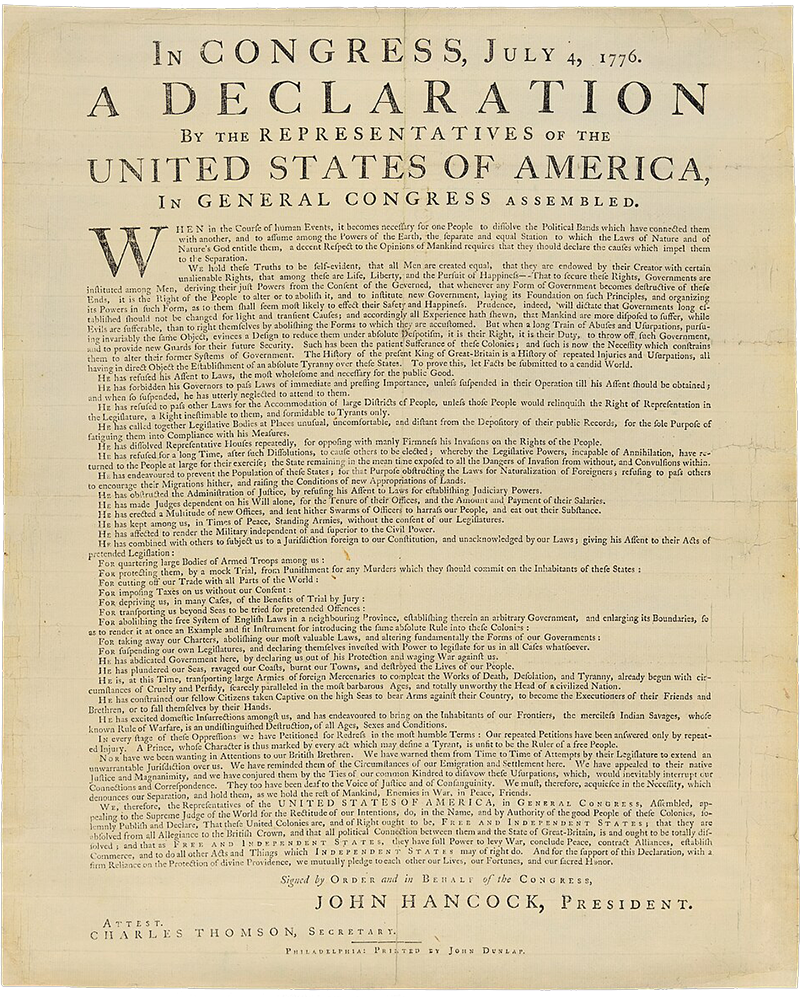
A Dunlap Broadside, held by the Library of Congress
It is important to remember the timeline when considering the impact the dispersal of this momentous document had on the populace in general and Washington’s army in particular. Major land battles had been fought, martial law imposed, New York was on the brink of being leveled, and foreign mercenaries had been sent in to repress what was deemed a wholesale rebellion.
Up to that point, the men fighting these invaders and the populace enduring their rapacity felt a great sense of aimlessness. Were they fighting for redress of grievances? Were they fighting to keep their homes from being burned? Was all this expenditure of lives and fortunes only to result in submitting yet again to King George’s yoke? Reports from Congress up until now had hardly heartened them; all seemed bogged down in endless discussion and gridlock. One can only imagine the encouragement and resolve that receiving this firm “expression of the American mind,” as Thomas Jefferson called it, produced in patriot hearts.
But Dunlap’s story does not end with his momentous role in publishing our founding document. In the true Spirit of 1776, later that year the printer threw off his printing leathers and took up the uniform, serving in the cavalry at the rank of captain. In this capacity Dunlap led a troop at Trenton and later at Princeton, closing out the year with a miraculous victory and was observed to “boldly demand the surrender” of a group of Hessians.
When freedom had been won, John Dunlap fittingly resumed his work at the press and was aptly chosen to print the final ratified version of our glorious Constitution. Despite being responsible for proliferating the works of America’s greatest minds, Dunlap left behind no written letters or memoirs of his own, only business records.
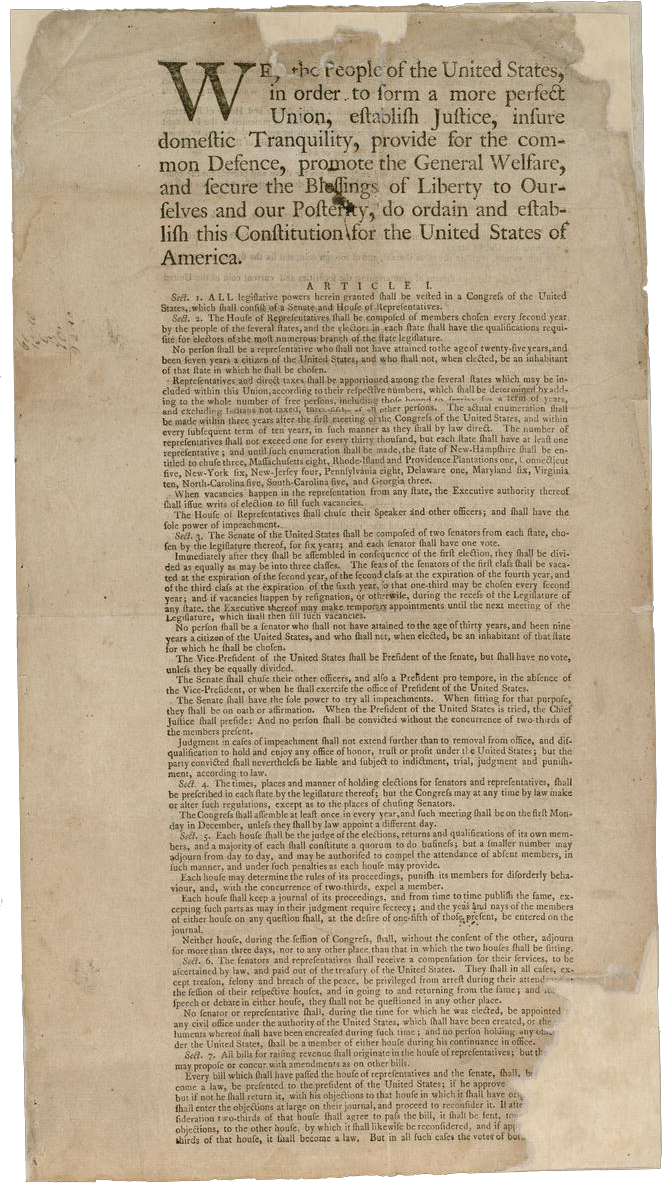
Original broadside printing of the United States Constitution, printed by Dunlap & Claypoole, 1787
In eulogy of him, Founding Father and signer of the Declaration Benjamin Rush wrote:
“From small beginnings as a printer he acquired by his business, but chiefly by speculation, an estate of perhaps three or four thousand dollars. So humble was his beginning in life that he slept upon a blanket under his counter and ate pepper-pot only bought in the market from his inability to purchase a bed or any other food. He was a staunch Revolutionary Whig, and active as a dragoon in the most perilous stages of the war. In the parties which divided his country he was always moderate, candid and just to both sides. To public institutions he was liberal, to the poor charitable and to his friends kind and affectionate. In his family he was less amiable and respectable than in society. He was early and uniformly my friend.”